Sustainability Without Sacrificing Durability
A holistic approach leads to an optimized vocational vehicle with the new Granite
One of the advantages of designing a new truck from scratch is that you can build anything into it, says Adam White, chief engineer, cab engineering, Mack® Trucks. And even with very early sketches of the new Granite® model, White explains, designers were thinking about the role sustainability would play.
So which Mack is right for you? While some Macks, such as the LR, are designed for specific market segments, and others, like the Granite, are designed for specialized conditions, some models are useful across applications. If you have a mixed model fleet, take a look at each of the models. Examine the features they share – and those they don’t –and apply those to your specific needs. Whichever Mack you select, you’ll be ready for the long haul.
The Process
White explained that the idea of sustainability is integrated in the way the design studio team works with the engineering team to develop vehicle concepts. “We simulate a lot of different materials on every component to make sure we have the right material selected and that we do so as responsibly as possible from a sustainability perspective without compromising the other design attributes,” he says.
Later, when sourcing those components, sustainability is one of the criteria Mack uses to select its supply chain partners. “We make sure they have the capabilities to work with sustainable material and that they are running their businesses as a responsible, sustainable company,” he adds.
Reducing emissions and selecting materials
The Granite design and engineering teams focus on reducing carbon dioxide (CO2) emissions through the engine and the aerodynamic performance of the vehicle. In addition, they made sure to design for recyclability and for a component’s ability to be remanufactured, so components could be remanufactured and reused.
When a component couldn’t be remanufactured, Mack looked for components that could be recycled. They also made material selections that allowed the company to take a landfill-free approach, so that nothing goes to a landfill.
White adds that the landfill free approach applies to the truck maker’s entire operation, which means looking at how the vehicles will be manufactured and assembled as well as looking at packaging material that is used to get parts from suppliers to Mack.
With the new Granite, White says they optimized the steel components and the cab structure and looked at how to make the truck as lightweight as possible. They focused on long-term durability, very high structural quality, and making sure there was minimal material waste in the stampings and the body-in-white processes.
All this attention to sustainability had to be done without sacrificing the durability and cost of the vehicle. The design team worked with Mack’s material scientists to find the right materials for the new Granite. There were several places where it was possible to use material with recycled content. The splash shields in the wheel wells have 75% recycled content. “We were able to do that with no degradation of performance or durability of the components and no cost increase to the customer,” White says. In addition, the entire instrument panel, including the dash, incorporated approximately 45% recycled content. “Neither of those solutions came with the negative consequence of having to pay more to accept a compromise,” he says.
While not related to material selection, the cab of the new Granite also contributes to sustainability. The cab is more aerodynamic than the one of the legacy product, and that is the result of lessons learned from Mack’s new highway trucks — the Pioneer and the Anthem.
“We were able to carry across some of the design language to the Granite and provide a fuel economy benefit to the customer — reducing CO2 emissions and allowing customers to complete their mission at a lower cost as they need less fuel to get the job done,” White explains.
What Customers Want
Owners of vocational trucks expect the trucks to be durable and to get the job done on a day-to-day basis. However, “businesses in general and the people who drive our trucks also want to have a sustainable truck and want to do what’s right for the environment,” White adds.
Reducing CO2 is important to Granite customers, he says, because it’s good for the planet and it translates into fuel economy, which goes directly to a fleet’s bottom line. Having the truck be as light as possible while still being durable is also important because it allows truck operators to maximize payload.
It's a Balancing Act
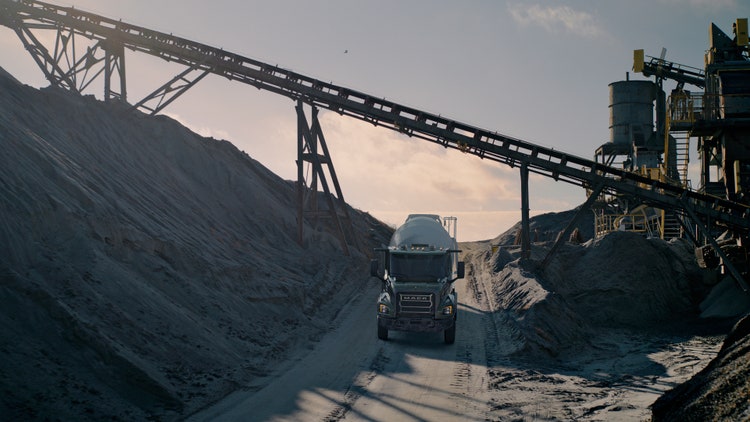
Vocational trucks operate in rigorous environments where durability is paramount, and it can take some balancing to meet durability and sustainability goals.
However, White believes this is possible and says, “It’s not about finding a compromise where you have to trade something off; it’s about finding an optimal solution.”
He adds, “We believe our customers have the same commitment as Mack Trucks to care for the planet and do right for society. They want to see as much sustainable content as possible. They want us to provide remanufactured components that have the same level of durability and reliability as brand-new components.”
Mack Tough is part of the legacy of Mack, and maintaining that with the new Granite was—from an engineering perspective—about the best way to incorporate CO2 reduction in the entire supply chain and add recycled content without compromising durability.
It is also about designing for ease of service and for remanufacturability.
“If you are designing for remanufacturability, you still can have the same durability, reliability, and the same strong brand identity,” White says.
A New Mindset
White explains that the idea of sustainability is integrated in the way the design studio team works with the engineering team to develop vehicle concepts. “We simulate a lot of different materials on every component to make sure we have the right material selected and that we do so as responsibly as possible from a sustainability perspective without compromising the other design attributes,” he says.
Later, when sourcing those components, sustainability is one of the criteria Mack uses to select its supply chain partners. “We make sure they have the capabilities to work with sustainable material and that they are running their businesses as a responsible, sustainable company,” he adds.